
Project details
Using Trenchbroom, which was a completly new engine to me, I developed and followed a pipeline that brought me to create: The Black Keep, a single-player 1996 Quake map.
-
Designed & Built the layout of the level
-
Scripted, Designed and Created gameplay encounters
-
Developed & Designed combat beats
-
Iterated on the level based on feedback from the Quake community
-
Applied the four-step level design process to the level (KiShoTenKetsu)
-
Designed, built, and iterated on the layout and playspaces
-
Added lighting and textures to the level to create atmosphere
Solo
8 weeks
Trenchbroom
Design Pillars
Interconnected
The players will constantly have a feeling of “This seems familiar” because the castle is interconnected in multiple ways. Paths loop back into each other, shortcuts unlock as players progress, and earlier areas become accessible from new angles. This design reinforces spatial memory, rewards curiosity, and gives players a sense of mastery as they begin to understand how each section of the Black Keep ties together. The interconnected layout ensures that every route feels meaningful and encourages players to explore confidently.
Exploration
Exploring in this level will be rewarding for the player because of the weapons and buffs they can find as well as armor and medkits. Optional side areas contain lore pieces and small environmental storytelling moments that flesh out the atmosphere of the Keep. Players who take their time will find hidden corridors, clever secrets, and branching rooms that offer both resources and unique encounters. Exploration isn’t just optional, It's a core part of the experience that reinforces player agency and makes the castle feel alive and worth investigating.
Verticality
Verticality enhances exploration and combat. Players navigate castle walls, a bridge over a graveyard filled with zombies, and hidden areas that reward exploration. Verticality adds tactical depth, with enemies attacking from different heights, and offers secret paths for players that explore. Moving upward or downward changes not only the flow of combat but also reveals new viewpoints, shortcuts, and environmental hazards. This layering of height creates memorable encounters and makes the castle feel more dynamic as players climb, descend, and uncover new levels of the Keep.
Level Information
Elevator Pitch:
The Black Keep is a level where players must navigate a mysterious, fortress-like keep, uncovering its hidden secrets by locating keys and unlocking new areas, all while preparing for a climactic battle against the final boss.
Theme:
Dark/Black Gothic Castle
Unique Selling Point:
The Black Keep offers a unique blend of vertical exploration and interconnectivity for the player, where the player must navigate through the level to find the two keys, and then loop through the level again to find The Ebon Mauler (boss) and escape the black keep for good.
Player Experience:
Atmospheric exploration.

About The Black Keep
The Black Keep was one of my first solo Level Design projects, created with the goal of improving my level design experience, expanding my flexibility with new software, and learning how to adapt to an existing game’s style. This project was built in TrenchBroom using the original Quake (1996) tools and gameplay constraints to stay faithful to the classic experience.
Verticality plays a key role in the level’s design, both as a means of foreshadowing upcoming areas and creating tension during combat encounters. By carefully framing sightlines and using layered spaces, I guided players’ attention and encouraged anticipation while maintaining spatial clarity.
The layout emphasizes interconnectivity, with players revisiting earlier areas from new perspectives as they unlock paths and keys throughout the Keep. This looping structure reinforces a sense of progression and familiarity while maintaining strong pacing and exploration flow.
Staying true to the spirit of Quake, I designed encounters and spaces around the limits of the original enemy behaviors. This approach ensured the level felt authentic to the 1996 experience while challenging me to think creatively within technical and design constraints.

Full Playthrough
Level Breakdown
Verticality:
The Black Keep is a level where verticality plays a central role in both navigation and storytelling. Players are continually guided toward their next objective through carefully framed sightlines and layered vertical spaces. Whether crossing bridges, walking along castle walls, or peering through windows overlooking the gardens below, players are given subtle visual cues that create anticipation and a sense of progression. This approach reinforces spatial awareness while keeping exploration intuitive and rewarding.
Interconnectivity:
Interconnectivity is a central aspect of The Black Keep, with the level designed to loop back on itself in meaningful ways. Players revisit earlier areas from new vantage points, unlocking shortcuts and discovering previously unreachable paths as they progress. This approach reinforces a strong sense of place and familiarity, encouraging exploration while maintaining a smooth, cohesive flow throughout the castle. Each connection is designed to feel purposeful, guiding players naturally through the environment without breaking immersion or pacing.
Combat Encounters:
Combat encounters in The Black Keep are designed to be varied and unpredictable, maintaining a constant sense of tension and unease. Each fight offers a unique setup while reinforcing the feeling that the player is never truly safe. Moments such as enemies ambushing the player in staircases, breaking through windows in the dining room, or guarding keys required to progress help create dynamic pacing and memorable surprises. These encounters encourage players to stay alert and adapt, making combat an integral part of the level’s atmosphere and progression.
Rewarding Exploration:
The Black Keep rewards players who take the time to explore beyond the main path. Hidden secrets, optional routes, and well-placed pickups encourage curiosity and experimentation. Many of these secrets require players to use Quake’s movement mechanics—such as precise jumping and parkour-like traversal—to reach hard-to-access areas. This not only reinforces the game’s mechanical depth but also provides a satisfying sense of mastery for players who learn to read the environment and take risks to uncover its hidden rewards.
Boss Fight:
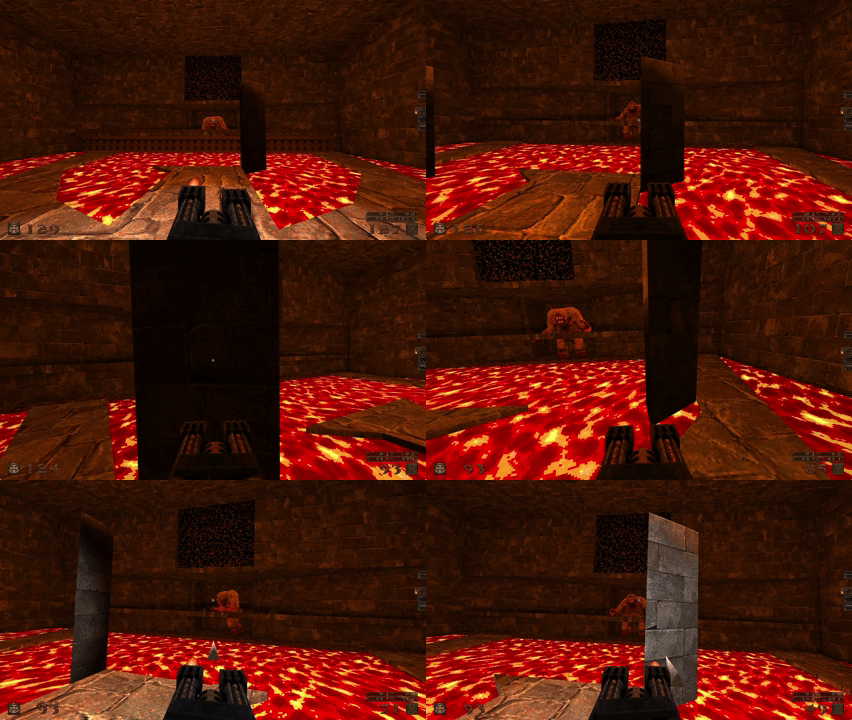
The level ends in a boss fight that pushes the Quake engine and its mechanics to their technological limits. This fight challenges players to balance offense and defense as they face an enemy capable of relentless ranged attacks. The arena itself plays an active role in the encounter, with pillars that rise and submerge in timed intervals from the lava, forcing players to adapt their positioning and make split-second decisions. By designing this encounter within the constraints of Quake’s original tools, I aimed to create a climactic and technically ambitious finale that tests the player’s mastery of movement, timing, and spatial awareness.
Project Research
The researching process all started with me researching vanilla Quake. This research included me analyzing the basics of the game such as the diffrent weapons, ammo types, armour types, enemies and their behavior, player strategies and common quake building metrics.
The research also included me playing through the game and watching veterans play through the game, I did this in oder to understand what was important in a Quake level and what players required from them.
Finally I ended up creating a Gym, a map to experiement with what Quake had to offer and a good place for me to test the players metrics, I also tested doors, elevators, keys, outside areas and combat beats.


In here I tested creating some structures within Trenchbroom such as a small window, a roof and a beam

Since my level is going to have some elevators, I wanted to test those in my gym as well so that's what I did in this room. (I tested the speed and height)

This is the last area in which i tested combat beats, specifically the ones with flying enemies because I want two combat beats in my level with only flying enemies where the player is either walking over a bridge and shooting flying enemies or where the player is walking on a ledge next to the mountains where the flying enemies will be
In here I tested creating some structures within Trenchbroom such as a small window, a roof and a beam
Level Planning
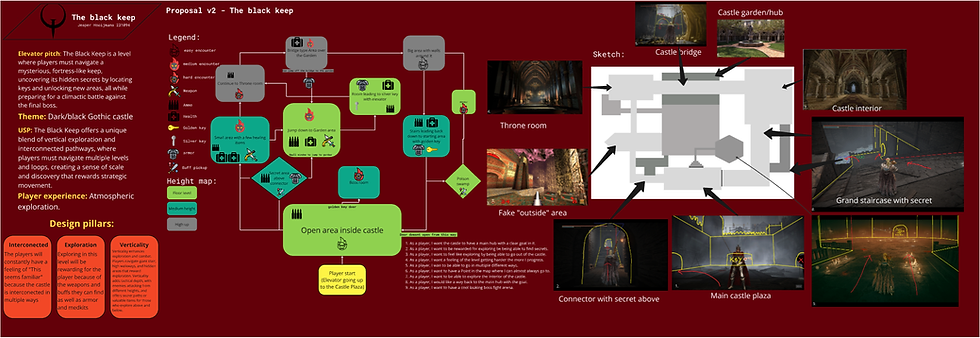
When planning my level, the two main aspects I wanted it to stand out for were interconnectivity and verticality. I wanted players to loop through areas multiple times, revisiting them when they were already familiar with them. I incorporated verticality by providing vantage points where players could see future parts of the level, making it easier for them to recognize and navigate different sections. I created a simple sketch using Figma, on how I first imagined the level would look like. After I did that I added some reference images next to each area on how I imagined the area would look.

After I created this, I also made a node map with each room of the level, the enemy encounters, the items placed in each room and where I wanted my keys to be. The keys being a very important feature here because these were the only things stopping the player from entering the whole castle without exploring.

After I had the general layout in mind and what I wanted each room to look like, I started using the four-step level design process: KiShoTenKetsu. I utilized this design technique to progress the difficulty of the map. All this planning and iterating based on feedback of the Quake community has led me to create a One-Pager that fully showcased my level's layout, the enemy and item placements, the height of the level, user stories and design decisions.

Intensity curve

Slide Show of my Proposals


Combat Beats
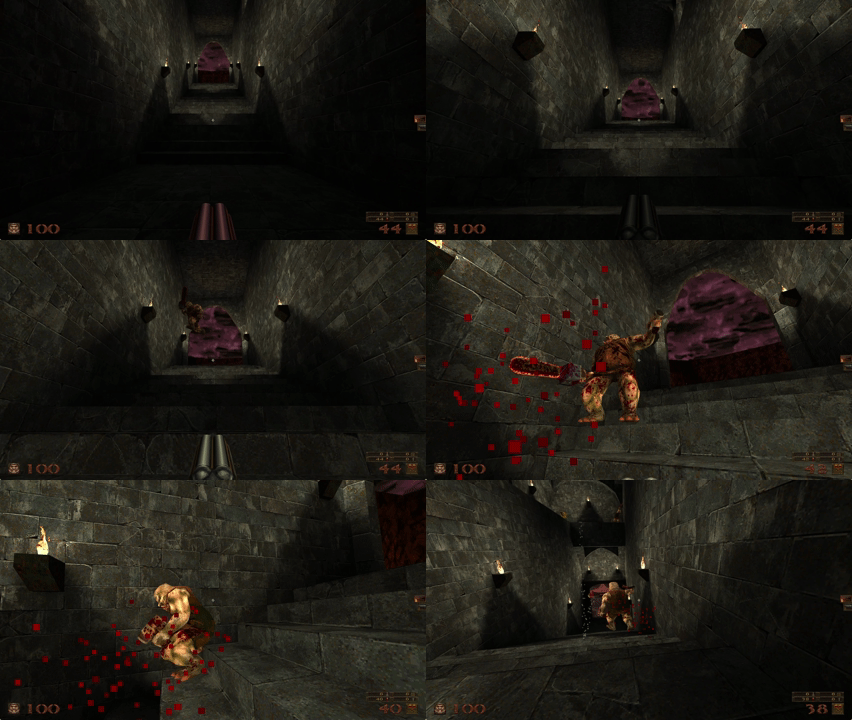
Connector Ambush
An ogre jumps infront of you while running up the stairs, once the player turns around they will see one more ogre shooting them from above the connector, hinting at a secret.
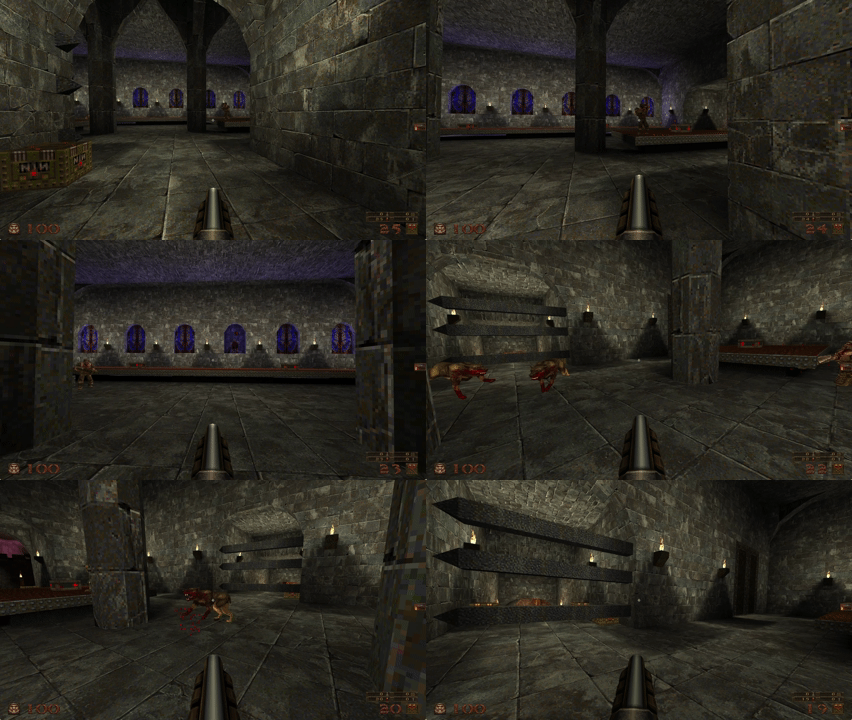
Dining Room Ambush
The window breaks with an enemy waiting behind it as soon as the player enters the dining room, the gates closes behind the player trapping them in the room.
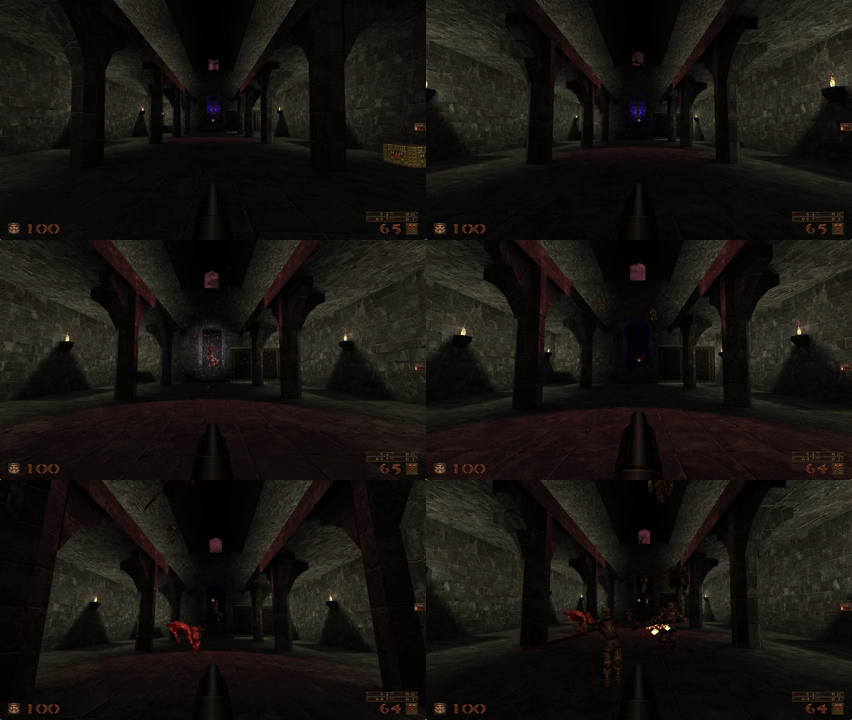
Castle Halls Chaos
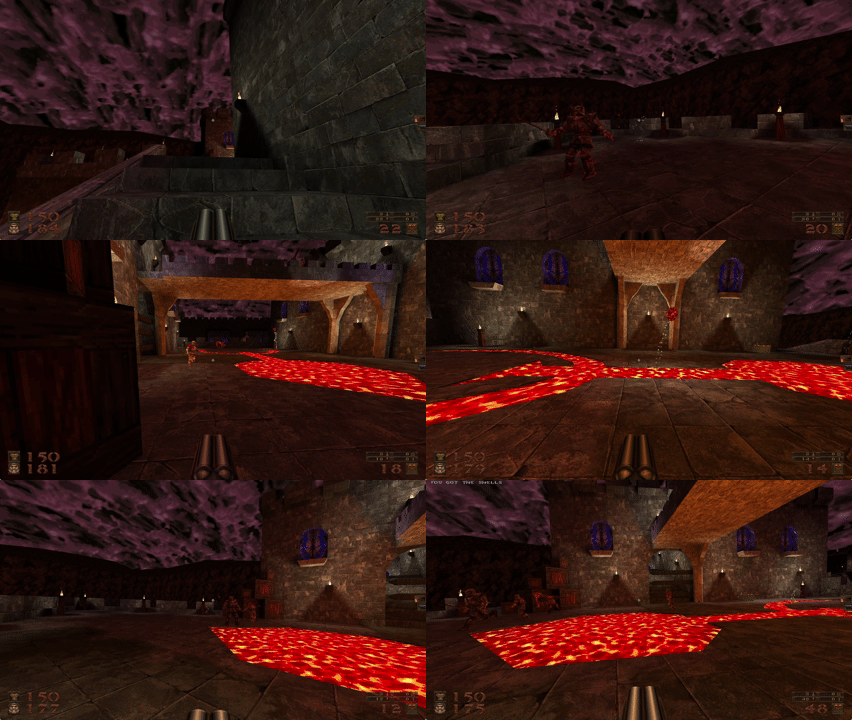
As soon as the player enters the castle halls, a window breaks with an ogre behind it and the player also gets jumped on by multiple enemies from above. This beat is placed after the player has access to the grenade launcher, making it satisfying to use it here.
Weapon Protection Ambush
The player parkours up on a small castle bridge to find a weapon, once they pick up this weapon a knight ambushes the player trying to protect its valuable
Castle Walls Wave Sequence
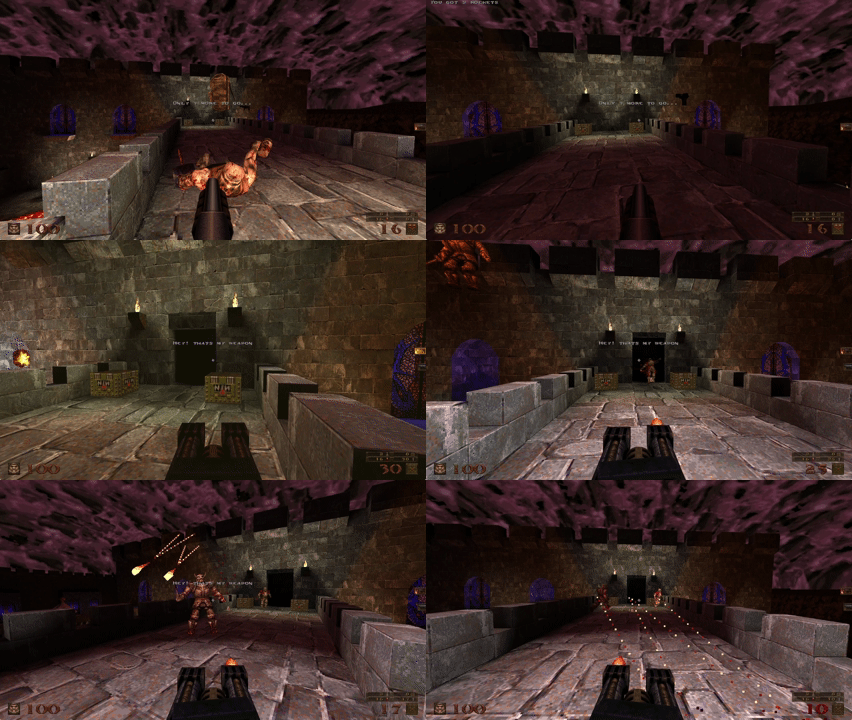
Once the player enters the castle walls, a wave with enemies starts spawning, during these waves hidden walls will sometimes open, revealing even more enemies.
Boss Fight
One of my biggest goals for this level was to create an unique boss fight, I wanted to conclude my level with an epic battle that would really feel rewarding for the players. Quake itself also had a boss fight in the base game but the problem with that was that since Quake itself is a game from 1996, the boss fight was completly made for that specific level and wasn't modular at all. Since I didn't want to just re-use this boss, since most veteran players who still play Quake by now will almost certainly have killed the main boss already. So, I came up with my own boss fight idea and started sketching and planning it out.
.png)
Once I had my idea for the boss sketched and fleshed out, I started going into Trenchbroom to see what would be possible. The main idea I had for the boss was that the player would walk into to the final boss room, only to have limited floor space in the shape of the Quake logo. And the player had to dodge the Shamblers attack by hiding behind pillars which would appear from the lava and submerging again a few seconds later. I started playing around with triggers and used the function which is normally used for opening doors to move the pillars in the room. After many test and iterations done, I truly believe I have fully achieved what I was aiming for and pushed Quake and the Trenchbroom engine to its limits, creating a memorable and fun closing fight for the level.
Closing Thoughts
The development of The Black Keep was without a doubt one of the most challenging yet rewarding experiences I’ve had as a level designer. It was my first full solo project, built from the ground up in Trenchbroom for the original Quake (1996), and it pushed me in every possible way — creatively, technically, and personally.
Working within an existing game like Quake gave me the opportunity to dive deep into what makes its design so timeless — the pacing, flow, and atmosphere that define the experience. Using Trenchbroom’s custom toolset, I was able to create something personal that stayed true to the spirit of the base game while adding my own interpretation of combat beats and environmental storytelling.
Throughout development, I faced numerous challenges, especially with time management, redoing large portions of the level, and finding the right balance between texturing, lighting, and combat flow. I also had to learn to let go of overscoped ideas and rebuild sections from scratch when needed — a difficult but invaluable part of the process.
From The Black Keep, I strengthened my skills in scale management, level layout design, combat encounter design, and even architectural research, which inspired much of the keep’s gothic structure. I also improved in areas like one-pager creation, modular kit usage, and iterative design — all of which have become essential tools for my future projects.
Playtesting was easily my favorite stage. Seeing players — from fellow students to veteran Quake players — explore and react to my level in real time was incredibly rewarding. Their excitement during the boss fight and their appreciation for the level’s layout made all the long hours worthwhile.
In the end, The Black Keep became more than just an assignment; it marked a major milestone in my growth as a designer. It taught me how to iterate, manage scope, and stay committed to creating something memorable. Despite its challenges, I wouldn’t change a thing — this project laid the foundation for the designer I’m becoming.