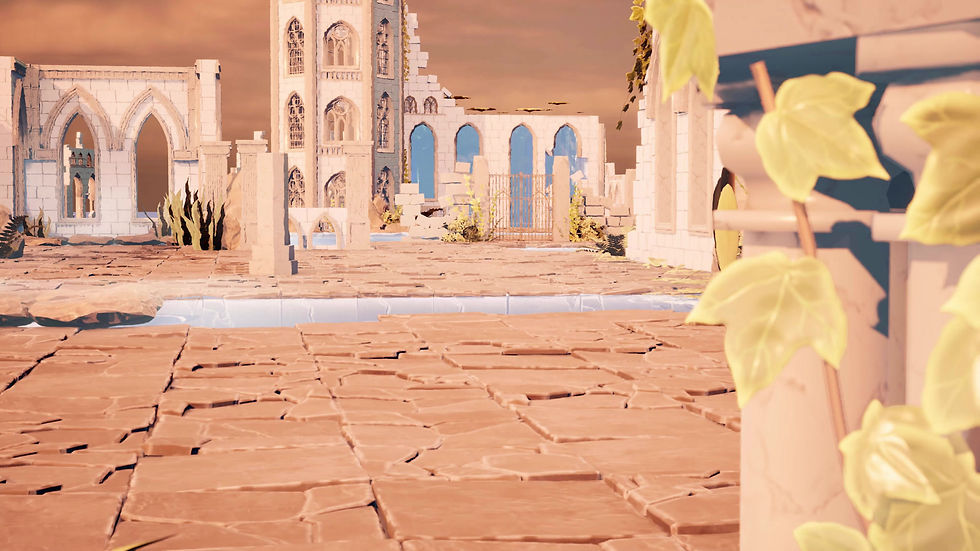
Project details
Using Unreal Engine, me and my team of 11 other people created "Igknigthed" A twin-stick shooter bullet hell, where you fight of enemies either alone or with a partner.
-
Designed & Built the layout of the level
-
Scripted and Designed enemy encounters
-
Peformed multiple playtests and utilized the feedback to iterate on the game
-
Sketched and Planned the layout and enemy placements in the level
-
Set-dressed the level using modular kit pieces provided by the artists of the team.
12 people
8 weeks
Unreal Engine 5
Project Information
Elevator Pitch:
Dive into the heart of a forgotten, flooded temple as powerful knights forged from fire. In this twinstick shooter bullet hell, you will fight off waves of enemies in order to progress through the temple and become the most powerful fighter of all! Work together or embark alone.
Theme:
Water/Sea creatures and buildings mixed with aspects of fire
Unique Selling Point:
Igknighted is a top down, twinsticker shooter bullet hell, where you can either fight alone or with a partner to become the most powerful fighter of all! The USP of this game being the team-up abilities you can get along with the enemy swarming, timed hazards and timed power-ups.
Player Experience:
Rushed, Chaos, Overstimulation, Timing, Powerfull

About Igknighted
Igknighted was my first large-scale team project, developed over eight weeks with a group of twelve students. As the Level Designer, I was responsible for creating the entire level — from early sketches and layout planning to final combat encounters and pacing. This project pushed me both creatively and technically as I worked to design a cohesive, fast-paced experience that complemented the game’s twin-stick bullet-hell mechanics.
I began by researching references and sketching out potential layouts, focusing on flow, player guidance, and encounter variety. Once the structure was set, I handled all enemy placements and encounter balancing to ensure the level maintained an engaging rhythm and consistent challenge throughout.
Working in Unreal Engine 5 taught me how to adapt quickly to new tools and pipelines while collaborating closely with other disciplines. This project gave me valuable experience in building a complete, polished level from the ground up within a large team environment.

Game Trailer
Level Breakdown
Play space:
After researching other twin-stick shooter games, I noticed that many relied on simple, box-shaped arenas with little variation or spatial interest. My goal was to break away from that pattern and design a level that offered more dynamic and engaging gameplay moments. At the same time, I wanted to keep the overall layout clean and readable, since I found that simpler structures tend to work best for top-down twin-stick shooters.
Interactive elements:
To add a sense of progression and pacing to the level, I designed several interactive elements that respond to the player’s actions. Certain areas feature gates that open or bridges that appear only after defeating waves of enemies, creating short moments of tension and anticipation. These mechanics helped control the player’s flow through the level, allowing me to pace encounters more deliberately and reward progression with new paths and opportunities for exploration.
Singleplayer and Co-op Balance:
The level was designed to support both solo and two-player co-op gameplay. I carefully balanced enemy placements, encounter intensity, and space design to ensure that the experience felt fair and engaging in both modes. While solo players face a steady challenge that rewards precision and movement, co-op play introduces more dynamic combat scenarios that encourage teamwork and positioning. Striking this balance required frequent playtesting and iteration to make sure each encounter remained enjoyable and challenging, no matter how many players were in the game.
Combat Encounters:
I carefully designed and placed all enemy spawns throughout the level to create encounters that complemented the layout and pacing of the environment. Each fight was planned to take advantage of the surrounding space — from cover placement to sightlines — ensuring that combat felt dynamic and readable from a top-down perspective. I also considered the random power-up drops that enemies could leave behind, balancing encounters to maintain a consistent level of challenge and prevent players from becoming overpowered too early. This required frequent iteration and playtesting to fine-tune difficulty and flow across both singleplayer and co-op modes.
Project Research
At the start of the project, I conducted extensive research into the twin-stick shooter genre to establish a solid foundation for my design decisions. I analyzed a variety of titles, including Nex Machina, to understand how successful games in the genre handled pacing, player feedback, and spatial design. To structure my findings, I created Zubek models to break down the types of fun these games provided, constructed onion diagrams to visualize their core systems, and performed target audience and market viability research to identify what appealed to players and what design spaces were underexplored.
Through this process, I discovered a common trend: most twin-stick shooters relied on simple, box-shaped arenas that lacked environmental diversity. This insight led me to define one of my main design goals — to create a level that offered more spatial variety and meaningful use of the playspace, while still maintaining the clarity necessary for top-down gameplay.
In addition, I examined enemy design and behavior across multiple games, studying how different attack patterns, movement types, and combinations affected the flow and difficulty of encounters. These insights directly informed my approach to encounter design and enemy placement, ensuring that my own level offered both engaging moment-to-moment combat and well-paced progression.


Level Planning
My level planning process began with early sketches and combat flow diagrams, all created in Figma to visualize encounter pacing and player progression. I focused on designing clear combat arenas that gradually introduced new challenges while maintaining consistent rhythm and flow.
The first image showcases the three-wave structure of the opening room, where I experimented with pacing and player movement. Each wave was designed to build tension and teach basic combat patterns without overwhelming the player early on.

The next image presents the second room, which also features three waves but introduces new enemy types — such as laser enemies that players can dash through. This room was meant to expand on the player’s understanding of the game’s mechanics while encouraging more reactive and spatially aware combat.

The third image highlights the final room, which consists of five waves combining everything the player had learned throughout the level. Here, I aimed to create a satisfying climax by mixing different enemy types, attack patterns, and spatial layouts to challenge both mastery and adaptability.

Following these initial sketches, I created several iterations based on feedback. The next series of images show how I refined each room’s layout, improved wave pacing, and added collectibles for skilled players to discover. I also revisited the first room to further polish its enemy flow and difficulty curve, ensuring it matched the overall pacing of the level.

.png)
The final image depicts a newly added starting area, designed to give players a short moment to orient themselves before entering the main combat sequence. Even here, I carefully placed a few low-threat enemies to encourage immediate engagement while allowing players to warm up to the controls and rhythm of the game.

Slide Show of in engine progress


Closing Thoughts
The development of Igknighted was a defining milestone in my growth as a designer. It was my first large-scale team project at BUAS and my first experience working with twelve people across multiple disciplines. Adapting to Unreal Engine 5 while balancing design, communication, and iteration pushed me out of my comfort zone and taught me how to collaborate effectively in a professional environment.
One of the biggest challenges I faced was balancing the pacing and difficulty of combat encounters for both solo and co-op play. Designing a linear level that worked equally well in both modes required careful planning and constant iteration. Still, I’m proud of how cohesive the final experience became — the flow between arenas, the rhythm of enemy waves, and the clarity of the playspace all came together to create something that felt fun, challenging, and well-tuned.
Working with such a large team also taught me the importance of communication and iteration. I learned to take feedback from multiple perspectives, adapt quickly, and refine ideas collaboratively. By the end of the project, I had gained a much deeper understanding of pacing, player guidance, and encounter structure within a top-down action game.
Seeing the game come to life — and watching players engage with the encounters I had designed — was incredibly rewarding. Igknighted taught me not only how to design within technical and genre-specific constraints, but also how to stay flexible and focused in a fast-paced team environment. It marked a huge step forward in both my creative and professional development as a level designer.